
August 06, 2026
Yellow Balau occupies a genuinely useful position in the decking market: a real hardwood, with real durability, at a price that doesn't require a premium-project budget to justify. If you're comparing decking species and IPE feels like more than your project needs, Balau is usually the next thing worth looking at properly rather than dropping straight to a softwood.
What Yellow Balau is
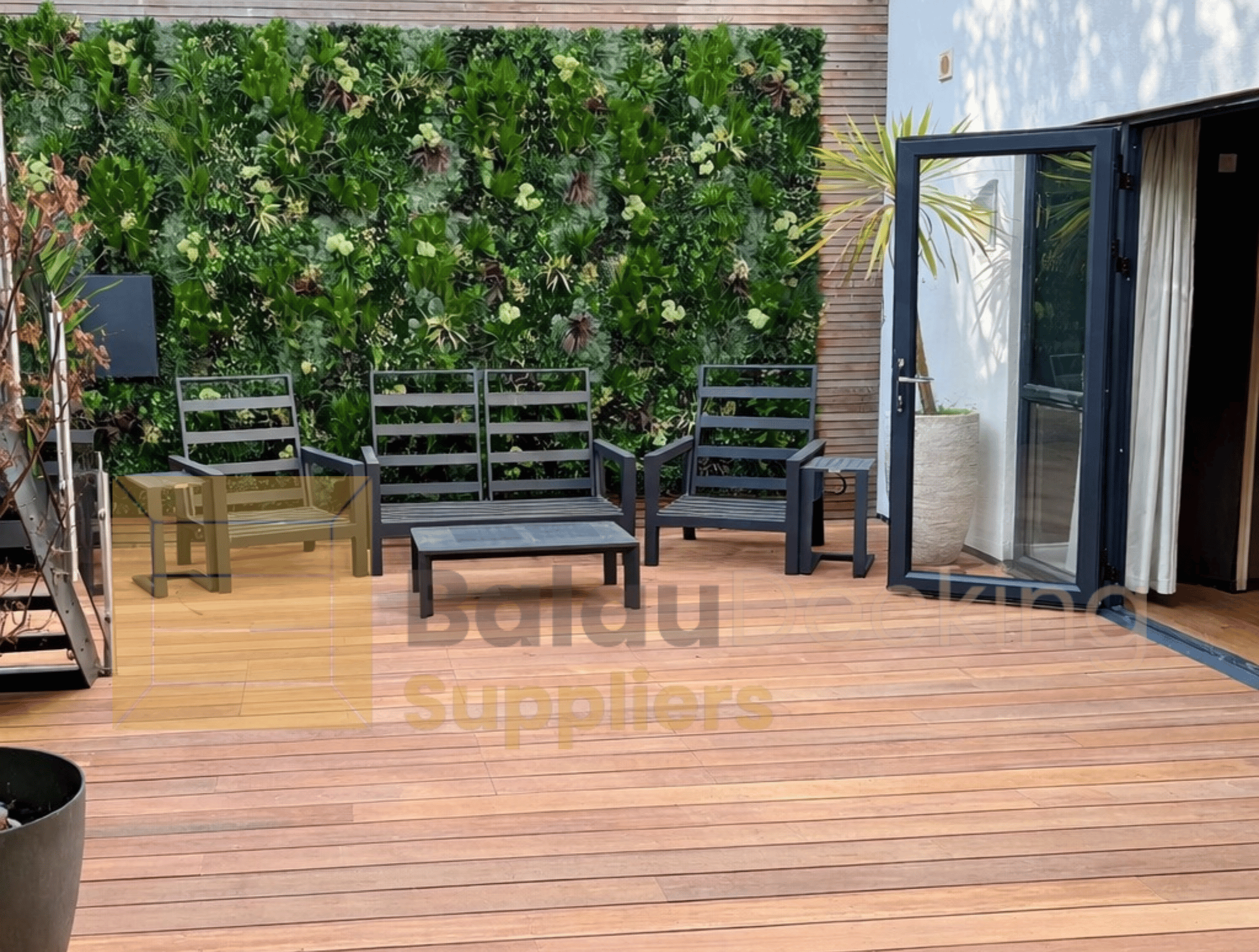
Yellow Balau is a dense hardwood from Southeast Asia, well established in the UK decking market as a durable, cost-effective alternative to premium hardwoods like IPE. It's naturally resistant to rot and insect attack without chemical treatment, and its density gives it genuine structural strength and wear resistance — this isn't a budget softwood dressed up as a hardwood, it's a real hardwood at a more accessible price point.
Certification: FSC and SVLK
Sourcing matters with any tropical hardwood, and Balau is typically available with two certification standards worth understanding. FSC certification is the internationally recognised sustainable forestry standard. SVLK (Sistem Verifikasi Legalitas Kayu) is Indonesia's own legality verification system, specifically confirming the timber was legally harvested and traded under Indonesian law. Seeing both on a Balau product is a strong signal of a properly sourced, traceable supply chain — worth checking for specifically rather than assuming any hardwood decking is automatically compliant.
Castellated vs smooth
Balau decking commonly comes in two board profiles:
Castellated boards have a grooved (usually a repeating notch pattern) underside, which increases airflow beneath the board and can help with drainage and drying — a practical consideration on installations with less ventilation beneath the deck structure.
Smooth boards give a cleaner, more contemporary finish on both faces, useful if you want the option to fit either face-up depending on wear over time.
Neither affects durability meaningfully; it's a practical/aesthetic choice based on your specific installation and ventilation.
Weathering and maintenance
Like most hardwood decking, Balau will weather from its fresh yellow-brown tone to a silvery grey if left untreated — a natural, low-maintenance outcome many people choose deliberately. If you want to maintain the warmer original colour, a hardwood decking oil applied periodically will do it. Either approach is fine; the timber's durability isn't affected by which you choose.
As with any dense hardwood, pre-drilling is generally necessary before fixing to avoid splitting, and stainless steel fixings are essential — both for longevity and to avoid staining around the fixing points.
Cost: where Balau sits
This is really the heart of Balau's appeal. It sits meaningfully below IPE on price while still delivering genuine hardwood durability — for a lot of residential projects, it's the more sensible choice unless you specifically need IPE's extra decades of expected lifespan or its particular density/hardness profile. If budget is a real factor in your decision, Balau deserves a proper look before you default to a premium species out of habit.
Is Yellow Balau right for your project?
Balau makes strong sense for garden decking, patios and most residential projects where you want genuine hardwood performance without paying premium-hardwood prices. If you're building for a shorter expected lifespan, working to a tighter budget, or simply don't need IPE's extreme density and longevity, Balau is very likely the better-value choice — real durability, sensibly priced.
If you're specifying for a project and want help working out board coverage, profile choice or fixing method, our team can talk you through it before you order.

General